Which vehicle lift for your workshop? Two-post, four-post and scissor lifts compared
Vehicle lift types compared by job, space, ceiling and the vehicles you'll lift, with a capacity guide and an at-a-glance decision table.
By Umetech · Uzman Editör
Contents
The most expensive mistake when choosing a lift is buying "the best seller". A 1-metre scissor lift that is perfect for a tyre shop is useless in a mechanical workshop; the two-post lift that mechanical workshops can't do without falls short for a shop that does wheel alignment. In this article we compare vehicle lift types by job, space, ceiling and the vehicles you'll lift, and finish with a table that lets you decide at a glance.
What is a vehicle lift, and what types are there?
A vehicle lift raises the car off the floor so you can work underneath it standing up; it is driven electro-hydraulically or electro-mechanically. Workshops use four main types:
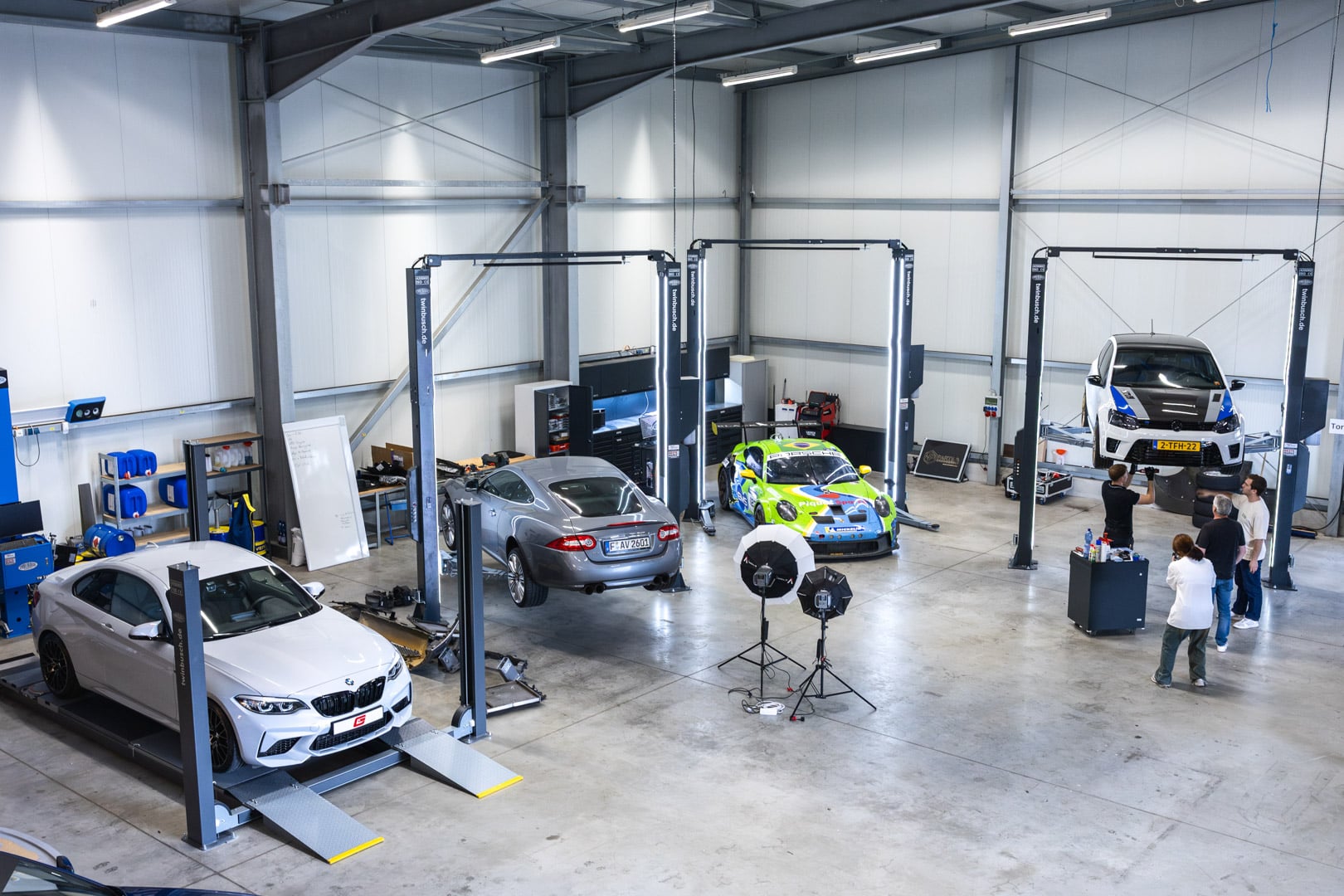
- Two-post lift: two columns, four carrying arms. Wheels hang free: the standard for mechanical, brake, suspension and gearbox work.
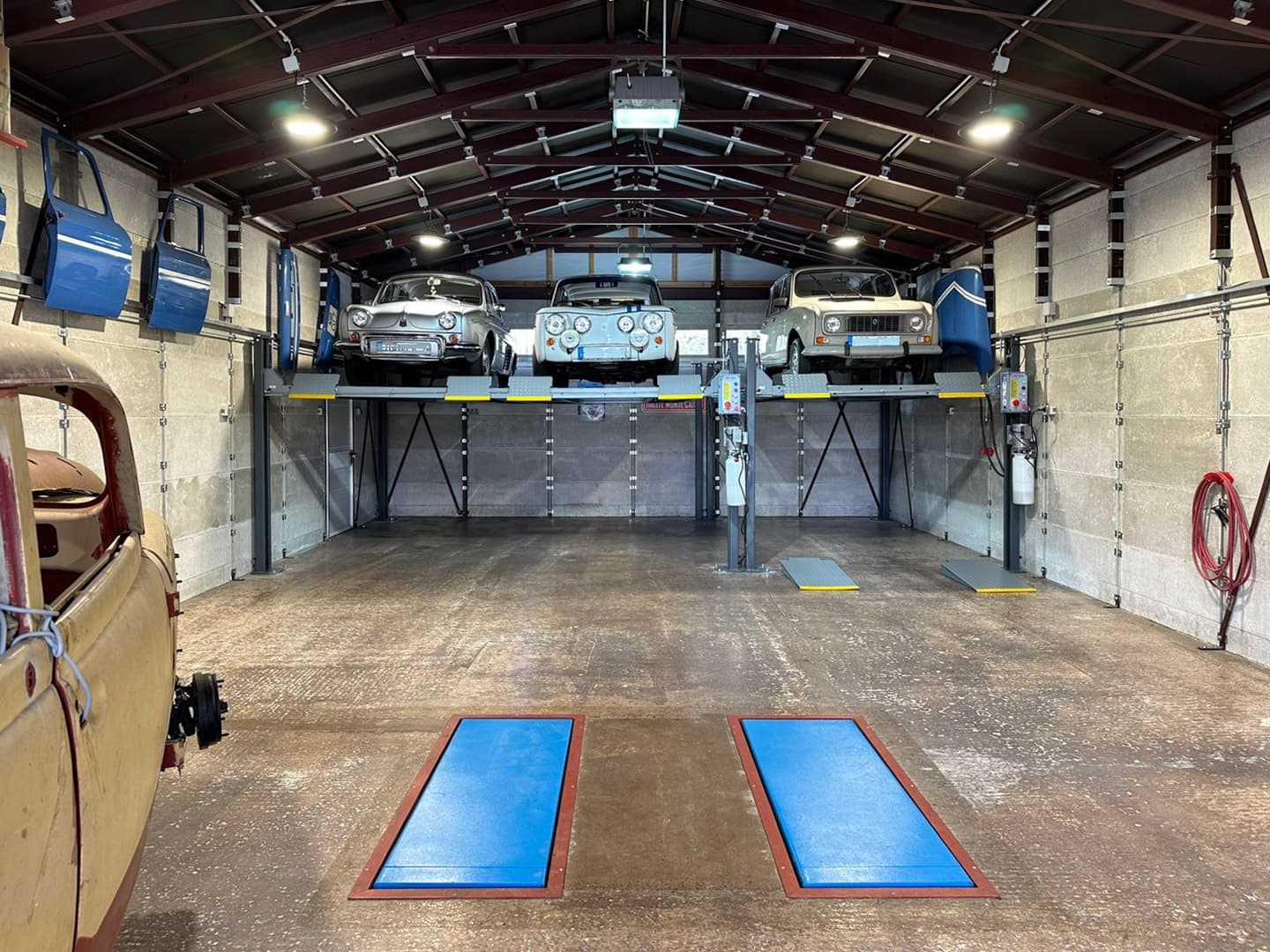
- Four-post lift: the vehicle is driven onto two platforms on its own wheels. For long-duration lifting, wheel alignment and parking.
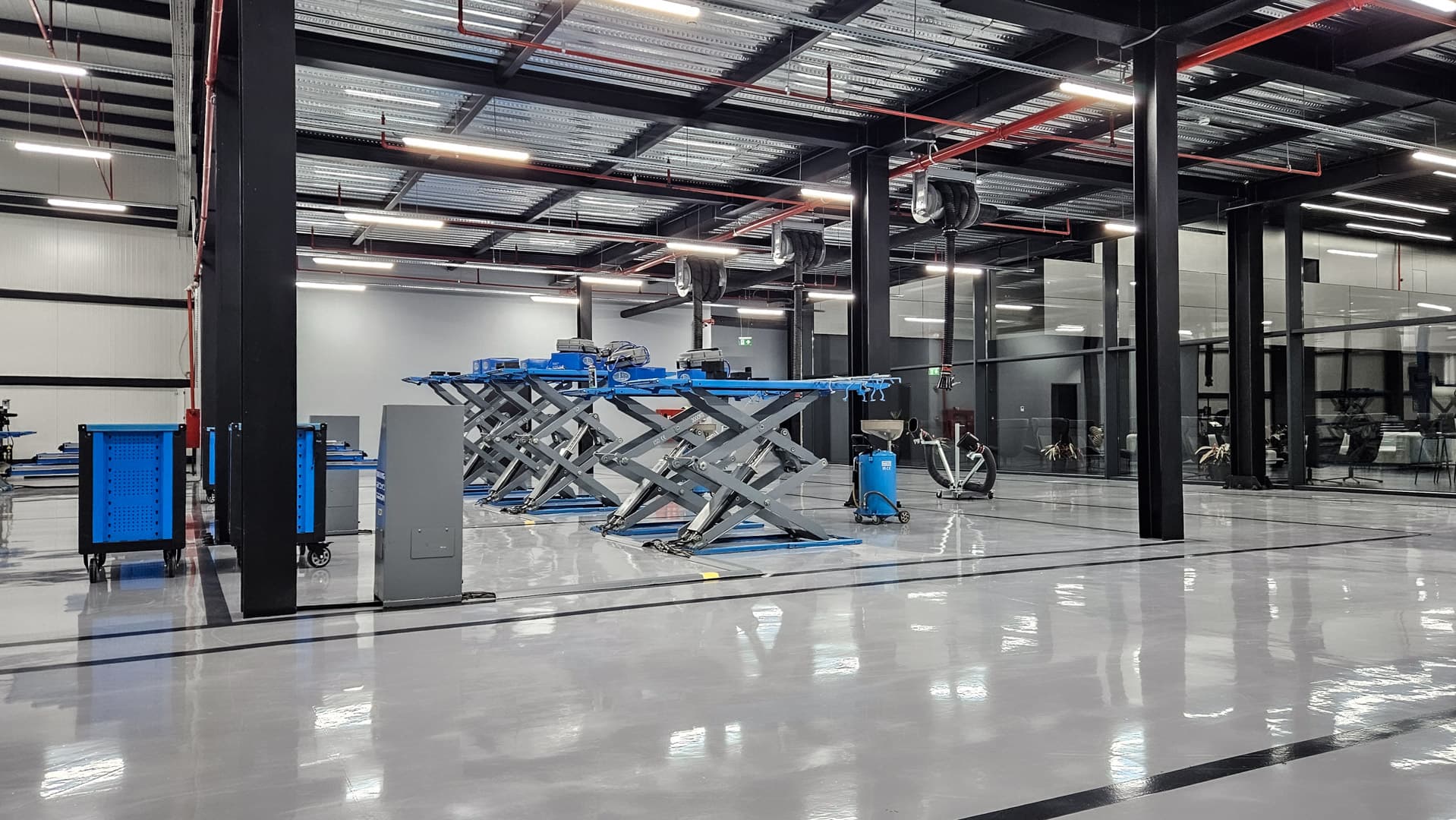
- Scissor lift: no posts; a scissor mechanism under the platform does the lifting. Available as a 1-metre tyre-shop type and 1.8–2 m full-height type; can be recessed into the floor.
- Single-post and special lifts: single-post (2.5 t) for tight spaces, motorcycle lifts, parking lifts and mobile column lifts for trucks and buses.
Two-post lift: the mechanical workshop standard
The great majority of lifts installed in workshops are two-post, for a simple reason: with the wheels hanging free you can do any job under the vehicle and around the wheels. Look at three details when choosing:
Base plate or overhead connection?
On base-plate models the two posts are connected by a 30–40 mm crossover plate on the floor; these are preferred where ceiling height is limited. TWINBUSCH's TW242E (35 mm) and TW236PE (30 mm) are this type; thanks to the low plate even low sports cars drive over without catching.
From UMETECH, the QWJ204BCE has a base plate, while the QWJ204ACE connects its posts with an overhead beam and leaves the floor completely clear. Overhead models need enough ceiling height (the QWJ204ACE is 3,900 mm tall overall).
Symmetric or asymmetric?
On asymmetric lifts the front arms are short and the rear arms long; the vehicle sits behind the posts and the doors open freely. On the TW242E the short arms adjust from 740–1,150 mm and the long arms from 890–1,390 mm, so you can work on anything from a passenger car to a small van on the same lift.
How many tonnes?
Capacity must exceed the laden weight of the heaviest vehicle you will lift. The table below maps both brands' two-post models to vehicle classes:
| Vehicles to be lifted | Recommended capacity | TWINBUSCH | UMETECH | Supply |
|---|---|---|---|---|
| Passenger cars, small SUVs | 3,600 kg | TW236PE | QWJ204BCE (4,000 kg) | 400 V / 3-phase |
| Cars, SUVs, small vans (Caddy, Transporter) | 4,200 kg | TW242E · TW242PE | QWJ204BCE · LA204CE (4,000 kg) | 230 V · 400 V |
| Same class, low ceiling / narrow garage | 4,200 kg | TW242G | - | 230 V |
| Panel vans, pick-ups, light trucks (Sprinter, Crafter) | 5,000 kg | TW250 | DH205CE (5,000 kg) | 400 V / 3-phase |
| Large vans, minibuses, light commercials over 3.5 t | 6,000 kg | TW260 | - | 400 V / 3-phase |
Rule of thumb: if your heaviest vehicle today is 3 tonnes, a 3.6 t lift is "enough", but a 4.2 t lift covers you for the next ten years, and the price difference is a small fraction of what the lift costs you over its life.
Four-post lift: wheel alignment and long-duration lifting
Because the vehicle stands on its own wheels, the four-post lift is the only choice for workshops doing wheel alignment (turntables and slip plates are added to the platforms). It is also used to keep one vehicle up all day while working on another underneath: "two-storey working" when space is tight.
TW445: 4,500 kg capacity, 4,510 mm platforms, 1,850 mm lifting height. It is not anchored to the floor, and with the load spread over four feet the floor requirement is lower than for a two-post lift; on the other hand, since the wheels stay on the platforms, brake and suspension work needs an additional wheel-free jacking beam.
From UMETECH, the QWJ445E sits in the same class: 4,500 kg capacity, 4,802 mm platforms and 1,830 mm lifting height. Its scissor jacking beam on the platforms means no separate jack is needed to free the wheels. For heavier vehicles the QWJ455E offers 5,500 kg and 5,500 mm platforms, while the compact DH407HL suits service and parking work with 3,200 kg.
Scissor lift: space saving and speed
A scissor lift has no posts; when lowered, only a low platform remains in the middle. There are two heights for two different jobs:
- 1 metre (tyre-shop lift): the TWS3510E raises 3,500 kg to 1,000 mm in 20 seconds. Ideal for tyre, brake, pad and body work done sitting or bending; its 110 mm drive-over height suits low vehicles. With the optional mobile kit it can be moved around the workshop and needs no anchoring.
- 1.8–2 metres (full height): the TWS3520E raises 3,500 kg to 2,000 mm and is floor-mounted, for standing work underneath. The in-ground TWS318U sits flush with the floor when lowered: the post-free solution for showrooms, wash bays and drive-through areas.
- With integrated jacking beam: the TWSA42UV2 is a 4,200 kg in-ground scissor lift whose integrated jack frees all four wheels, alignment-ready.
Among UMETECH scissor lifts, the in-ground double scissor QWJ630 (3,200 kg) lifts to 2,140 mm and leaves the floor clear when lowered. For full height without a pit, the surface-mounted DH635 rises from 105 mm to 1,900 mm. For wheel alignment, the long-platform QDH845 (in-ground) and AQDH945A (surface-mounted, 163 mm starting height) carry 4,500 kg.
The scissor lift's limitation: the central underside of the vehicle is covered by the platform, so exhaust, gearbox and centre-tunnel work is less convenient than on a two-post lift.
Special cases
- Tight single-vehicle bay: single-post lifts (2,500 kg) stand to one side and don't block a second vehicle passing.
- Motorcycle workshop: the TWM02, 500 kg, 1,200 mm, with front-wheel clamp. The UMETECH MQ500 lifts 500 kg to 1,100 mm; its platform can be widened with side extensions for ATVs.
- EV batteries: UMETECH EV battery lifts (1,200–1,500 kg) are designed to remove, fit and move battery packs from under a vehicle on a lift.
- Parking and storage: parking lifts (TW436P, 3,600 kg) stack two cars; not designed for workshop use.
- Trucks, buses, plant: mobile column lifts lift 22–45 tonnes with 4 or 6 columns; the columns are movable, so no fixed installation is needed.
Decision table
| Workshop type / need | Recommended lift | Why | Example model |
|---|---|---|---|
| General mechanical workshop | Two-post 4.2 t | Wheels free, suits every job | TW242E / TW242PE · QWJ204BCE |
| Mostly light commercials | Two-post 5–6 t | Van and minibus weights | TW250 / TW260 · DH205CE |
| Tyres, brakes, pads | Scissor 1 m | 20 s lift, no anchoring, movable | TWS3510E |
| Wheel alignment | Four-post or scissor with jacking beam | Vehicle stands on its wheels | TW445 / TWSA42UV2 · QWJ445E · QDH845 |
| Body, detailing, preparation | Scissor 1 m or 1.8 m | No posts, access from all sides | TWS3510E / TWS3520E · DH635 |
| Ceiling < 3.3 m or narrow garage | Two-post garage model | 2,324 mm posts, 2,986 mm width | TW242G |
| Showroom, drive-through area | In-ground scissor | Flush with the floor when lowered | TWS318U · QWJ630 |
| Trucks, buses | Mobile column | 22–45 t, no fixed installation | TW550 / TW575 |
Undecided? Describe the work you do and the vehicles you'll lift in the quote form, and we'll settle on the right type and capacity together.
Frequently asked.
A 4.2 t two-post. It handles tyre work too; the reverse (mechanical work on a 1 m scissor) isn't possible. As volume grows, a 1 m scissor is added as the second lift.
Both are safe when correctly installed and used. On a two-post the risk is placing the vehicle wrongly on its lifting points; on a four-post the vehicle stands on its own wheels, so there is no positioning error. Both need an automatic safety lock that engages at every step.
Not on 1-metre types; yes on full-height types of 1.8 m and above (TWS3520E, TWS318U).
TWINBUSCH lifts are electro-hydraulic: hydraulic cylinders lift, mechanical locks hold. Electro-mechanical (screw-spindle) lifts are slower and need more maintenance; electro-hydraulic is today's workshop standard.
Floor, ceiling, power and space are covered in a separate article: Car lift installation: concrete floor, ceiling height, power and space requirements.
Capacity, type, equipment, certification, installation and warranty. See The 7 factors that determine vehicle lift prices.